

What is menopause, and how do I know I have reached it?
Menopause is the point when your periods stop for good. It is a normal part of aging, not a disease. It is confirmed only after 12 months in a row with no period and no spotting. Until you have reached that mark, you are still in the transition, even if your periods have become rare.
Most women begin the transition between ages 45 and 55. The average age of menopause in the United States is about 52 according to the National Institute on Aging, and about 51 according to the American College of Obstetricians and Gynecologists. Your own timing can be earlier or later than the average.
Menopause before age 45 is called early menopause, and before age 40 it is called premature menopause. Having only your uterus removed does not cause menopause unless your ovaries are removed too. If you had a hysterectomy and kept your ovaries, your own history matters when we work out where you are.
Every woman's experience is different. Some have no symptoms or only mild ones, while others have symptoms that affect their sleep and daily life. The rest of this page walks through what the research says, in plain language, so you can arrive at your visit with Gissella Rivera at Viva Centers in Doral knowing what to ask.
- Menopause = 12 months with no period or spotting.
- The transition before it is called perimenopause.
- Early menopause is before 45; premature menopause is before 40.
What are the stages of the menopause transition?
Researchers use a standard staging system called STRAW+10 to describe reproductive aging. It applies regardless of age, ethnicity, body size or lifestyle. The transition before menopause is called perimenopause. During it, the ovaries make less estrogen and progesterone, and cycles become unpredictable.
In the early transition, the length of your cycles starts to differ from one month to the next by 7 days or more, and this keeps happening. In the late transition, you skip a period of 60 days or longer. The late transition lasts about 1 to 3 years on average, and hot flashes are likely during it.
After you reach 12 months without a period, you are considered postmenopausal. Until then, pregnancy is still possible, and the National Institute on Aging advises continuing birth control for at least 12 months after your last period if you do not want to become pregnant.
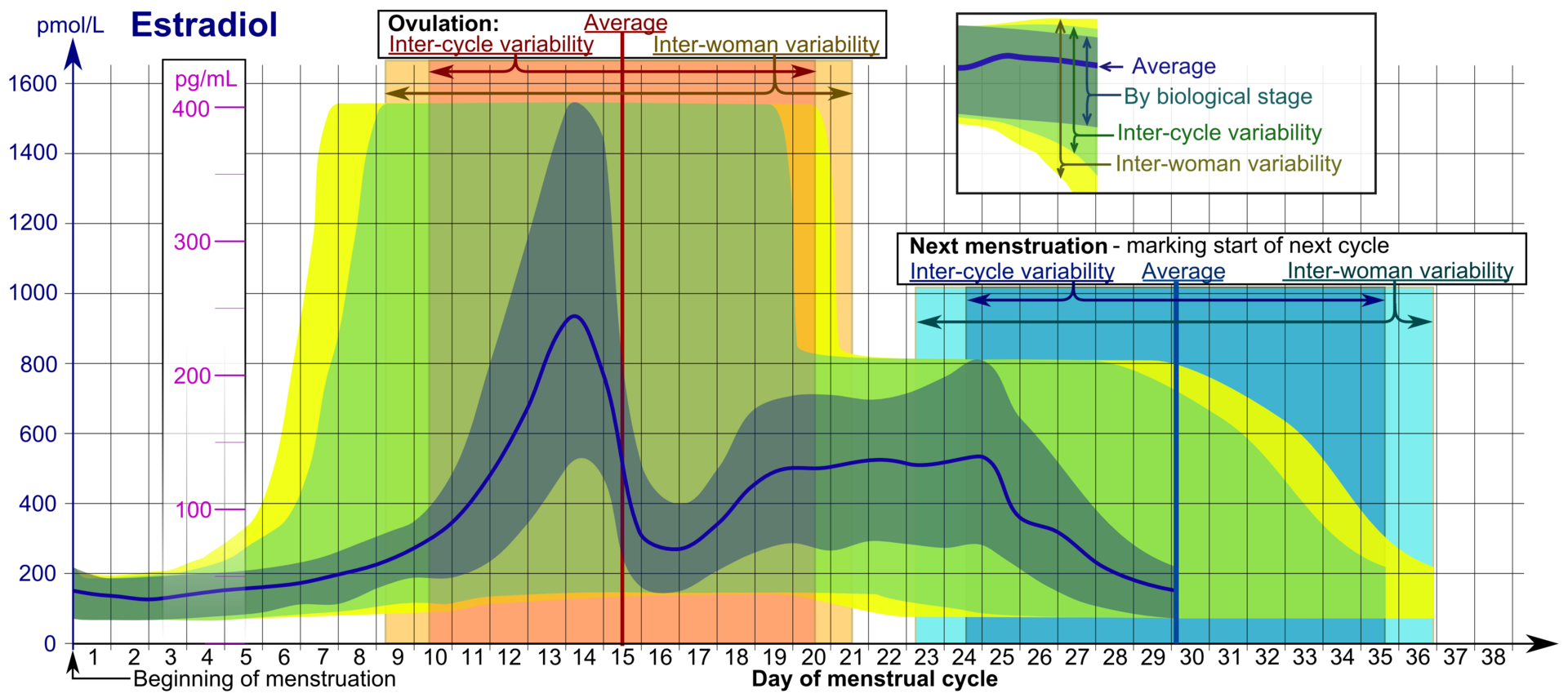
The chart shows the usual rise and fall of estrogen across one normal menstrual cycle. During the transition, cycles become less predictable.
- Early transition: cycle length differs by 7 days or more, persistently.
- Late transition: a skipped period of 60 days or longer; about 1 to 3 years on average.
- Postmenopause: after 12 months with no period.
How long do hot flashes and night sweats last?
Hot flashes and night sweats are the best-known menopause symptoms. Most individual hot flashes last between 30 seconds and 10 minutes. How long the problem continues varies a lot. The NHS says symptoms usually last 7 to 9 years and sometimes longer, and they can change over time.
The SWAN study followed 3,302 women at seven U.S. sites from 1996 to 2013. It found that frequent hot flashes or night sweats lasted a median of 7.4 years in total, and 4.5 years after the final period. Women whose hot flashes began early, before menopause or in early perimenopause, had the longest course, with a median of more than 11.8 years.
Duration also differed between groups of women. In SWAN, Black women reported the longest duration, with a median of 10.1 years. The National Institute on Aging and the NHS likewise note differences by race and ethnicity. This does not mean your experience is fixed, only that it is worth telling your clinician how long and how often your symptoms occur.
Not everyone has hot flashes. Some women have none or only mild ones. If they interrupt your sleep or your day, treatment is available, and you do not have to simply wait them out. Noting when your symptoms occur for a couple of weeks can make the visit more useful.
Why are my sleep, mood, memory and body changing?
Falling estrogen can affect more than temperature. Trouble sleeping, mood changes, bladder problems, and aches in the joints and muscles are all described as common in menopause. Many women also notice what they call brain fog, and changes in their body, such as a larger waist or weight gain.
Several of these symptoms can occur together. It helps to describe the whole picture to your clinician rather than one symptom at a time: what changed, when it started, and what makes it better or worse.
Symptoms can also change over time, according to the NHS. Because symptoms like these can have other causes too, the visit includes a review of your history and medicines, not only your age.
- Sleep trouble and night sweats
- Mood changes
- Brain fog and trouble concentrating
- Joint and muscle aches
- Body changes such as a larger waist or weight gain
How can vaginal, bladder and sexual symptoms be treated?
As estrogen falls, many women develop vaginal dryness, pain with sex, bladder problems and more urinary infections. These changes are common and treatable, and they are worth raising even if they feel awkward to discuss.
Effective help exists. Hormone therapy is the most effective treatment for vaginal and urinary symptoms. For dryness alone, local vaginal estrogen is an option; it is used for dryness only. The Endocrine Society also lists low-dose vaginal estrogen, and non-hormone vaginal moisturizers and lubricants for women who prefer to avoid hormones.
On safety, the NHS states that vaginal estrogen treats dryness and does not raise breast cancer or blood clot risk. As always, your own history decides what is suitable, which is why we review it with you first.
Talk openly with your partner, too. Pain or dryness can make intimacy harder, and naming the problem is the first step to solving it.
- Vaginal dryness, burning or pain with sex
- Urinary urgency and more urinary infections
- Moisturizers and lubricants are non-hormone options
- Local vaginal estrogen treats dryness

How does menopause affect my bones and heart?
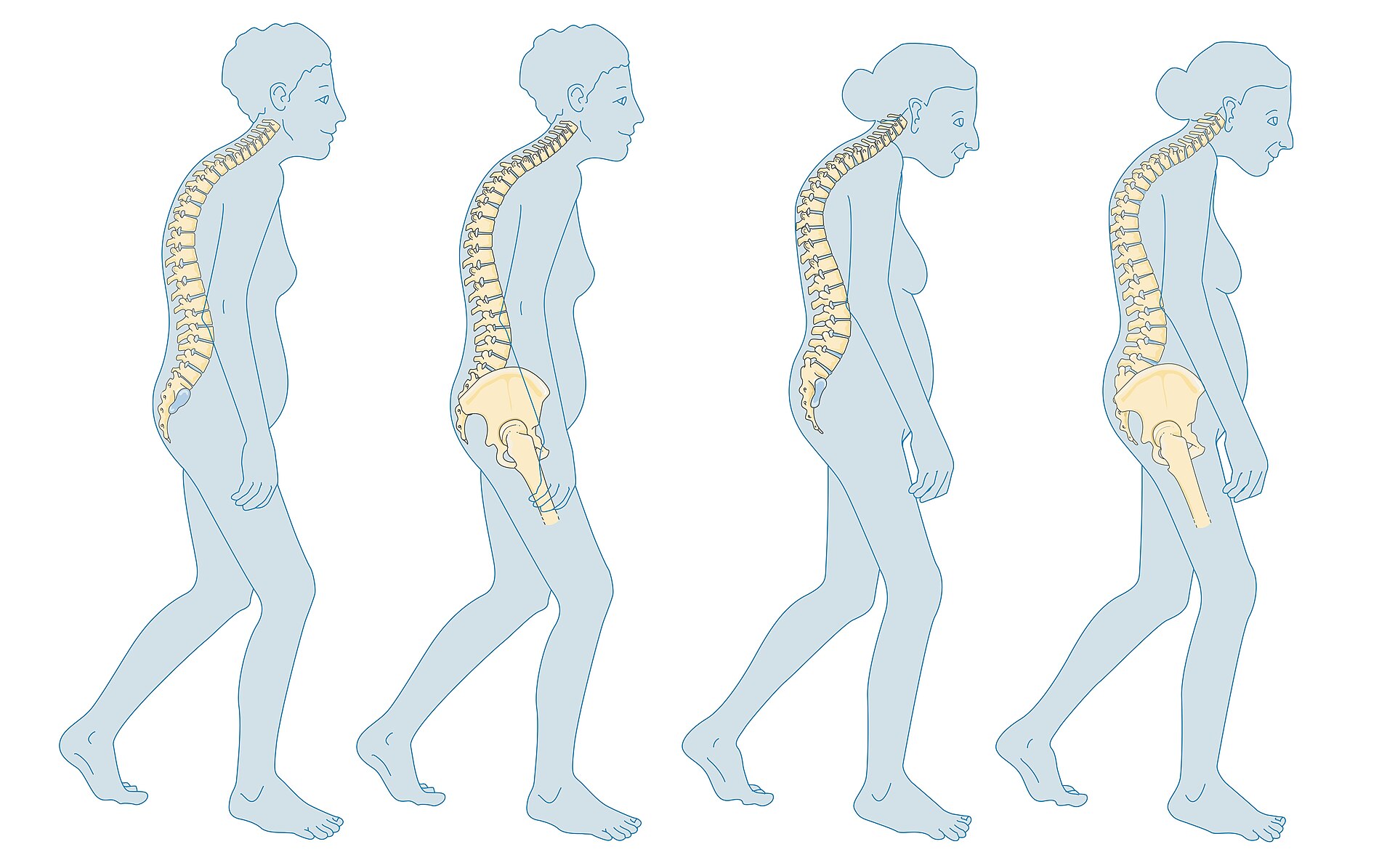
Estrogen helps protect your bones. After menopause, women lose bone faster during the first 4 to 8 years, mostly at the hip, wrist and spine. This bone loss can lead to fractures later, which is why bone health is part of standard menopause advice, along with keeping your muscle strength through physical activity.
Eating well, staying active, and getting enough calcium and vitamin D support your bones. Hormone therapy also protects against bone loss and fractures, but it is not the only route, and the decision depends on your whole health picture. When it is clinically useful, your visit can include a referral for a bone density scan.
Falling estrogen can also raise cholesterol and raise the risk of heart disease and stroke. Hormone therapy is not recommended as a way to prevent heart disease, according to the Endocrine Society. The steps supported here are movement, a nourishing diet, not smoking, and keeping track of cholesterol, which can rise as estrogen falls.
- Fastest bone loss: first 4 to 8 years after menopause
- Most affected: hip, wrist and spine
- Cholesterol can rise as estrogen falls
- Hormone therapy is not used to prevent heart disease
How is menopause diagnosed, and do I need hormone blood tests?
In otherwise healthy women aged 45 or older, the NICE guideline says menopause and perimenopause can be identified from symptoms and menstrual history alone, without lab tests. Menopause is identified after 12 months without a period when you are not using hormonal contraception.
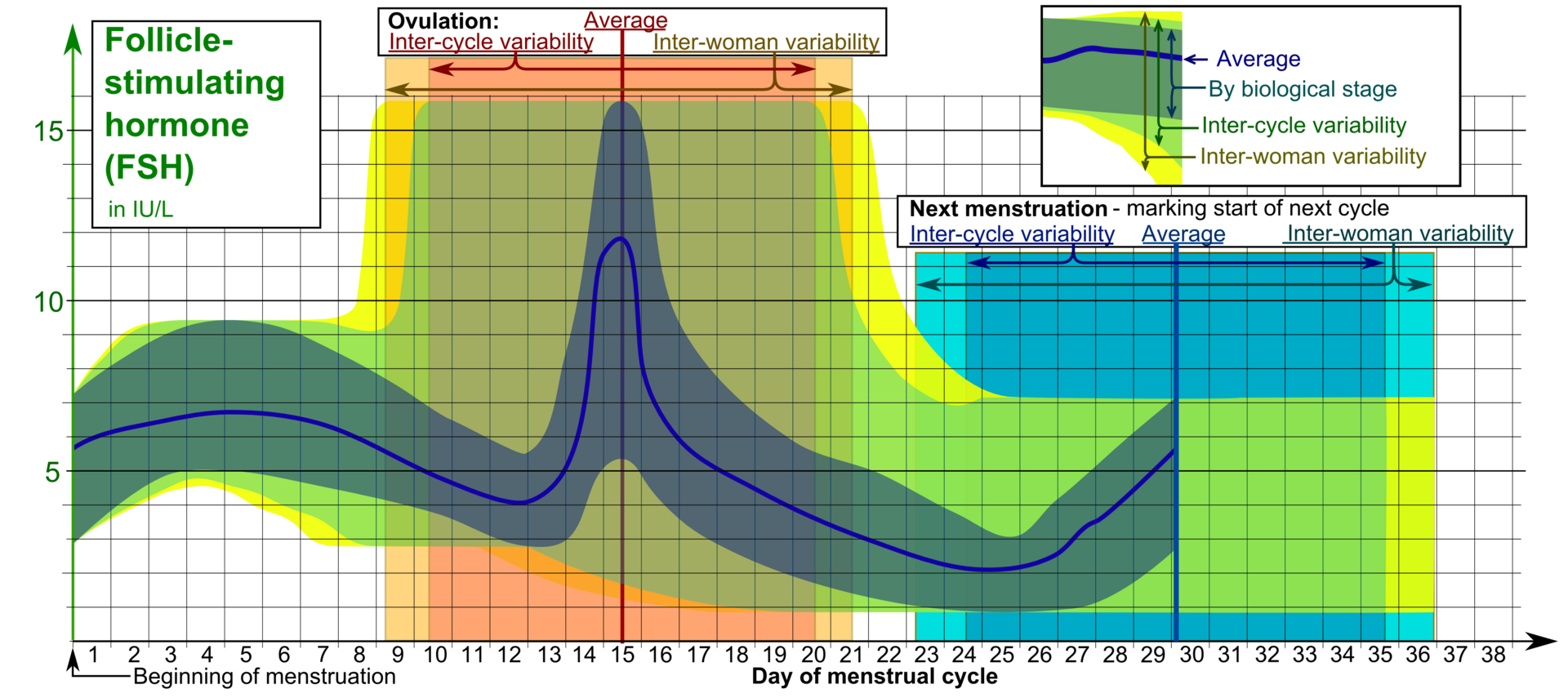
A blood test for follicle-stimulating hormone, or FSH, is considered only in two situations: ages 40 to 45 with symptoms and a change in the cycle, or under 40 when menopause is suspected. The chart shows how FSH normally rises and falls across one ovulatory cycle, with a peak around ovulation. It is a picture of a typical cycle, not a menopause cutoff and not a way to read your own result.
There is a reason routine hormone panels are not needed for healthy women aged 45 or older. During the late transition, FSH can swing between the menopausal range and the normal range, so a single result can mislead. We order labs when they answer a real question, such as ruling out another cause of your symptoms, and not by habit.
Your clinician should also give advice on bone health, contraception and keeping your muscle strength through physical activity.
What can hormone therapy do for me, and when is the balance more favorable?
Hormone therapy is the most effective treatment for hot flashes and night sweats, and for vaginal and urinary symptoms. It also protects against bone loss and fractures. The 2022 position statement of The Menopause Society concludes that for women younger than 60, or within 10 years of their last period, with no reason to avoid it, the balance of benefit and risk is generally favorable. The NHS reaches a similar view for women under 60 without a high risk of breast cancer or blood clots.
Timing matters. Starting more than 10 years after menopause, or after age 60, looks less favorable, because the absolute risks of heart disease, stroke, blood clots and dementia are higher. Two trials looked at timing. Neither shows that hormone therapy prevents heart attacks. In ELITE, 643 healthy women took oral estradiol or placebo. The study measured artery-wall thickening, not heart attacks. Thickening progressed more slowly with estradiol in women under 6 years past menopause, but not in women 10 or more years past menopause. In KEEPS, 727 women aged 42 to 58, 6 to 36 months after the last period, took hormone therapy or placebo for four years. Artery thickening did not change. Some cholesterol and insulin-resistance markers improved, but the trial was too small to compare heart attacks or strokes.
Hormone therapy comes in several forms: pills, patches, gels and sprays, plus local vaginal estrogen for dryness only. Women who still have a uterus also need a progestogen to protect the uterine lining. Risk depends on the type, dose, length of use, route, timing and whether a progestogen is used, so the plan is tailored to you, uses the lowest effective dose, and is revisited every year.
One more point worth knowing: current evidence does not support using hormone therapy to prevent heart disease, breast cancer or dementia. It is a treatment for symptoms and bone loss, not a prevention program.
- Best-studied use: bothersome hot flashes, night sweats, vaginal and urinary symptoms
- Most favorable: under 60 or within 10 years of menopause
- Forms: pills, patches, gels, sprays; local vaginal estrogen for dryness
- Women with a uterus also need a progestogen
- Review the decision every year
Sources
- The 2022 hormone therapy position statement of The North American Menopause Society
- Treatment of Symptoms of the Menopause: An Endocrine Society Clinical Practice Guideline
- Vascular effects of early versus late postmenopausal treatment with estradiol (ELITE)
- Arterial imaging outcomes and cardiovascular risk factors in recently menopausal women: a randomized trial (KEEPS)
- Hormone Therapy for Menopause (FAQ)
- Benefits and risks of hormone replacement therapy (HRT)
What are the risks of hormone therapy, and who should not use it?
The Women's Health Initiative, or WHI, is the largest trial on this question. In women with a uterus who took estrogen plus progestin for an average of 5.2 years, the hazard ratios were 1.26 for breast cancer, 1.41 for stroke, 2.13 for blood clots in the lungs and 1.29 for coronary heart disease. Those hazard ratios compare the hormone group with the placebo group. They are not your personal risk and not the percentage of women who will have that problem. The same trial found lower rates of colorectal cancer (0.63) and hip fracture (0.66).
Longer follow-up refined the picture. Estrogen plus progestin kept a higher breast cancer risk (hazard ratio 1.28), while estrogen alone, used after hysterectomy, was associated with lower breast cancer risk (0.78) and fewer breast cancer deaths (0.60). That lower breast-cancer finding is not a reason to use hormone therapy to prevent breast cancer. Estrogen alone is the hysterectomy regimen. If you have a uterus, a progestogen is still needed to protect the lining. Over 18 years, deaths from any cause did not differ between women who used hormone therapy and those who did not (27.1% versus 27.6%).
Other major groups agree on the direction. ACOG notes that combined therapy has a small increased risk of breast cancer and heart attack, and both types have a small increased risk of stroke and deep-vein blood clots, with non-pill forms possibly carrying less clot risk. The NHS estimates about 5 extra breast cancers per 1,000 women who take combined therapy for 5 years. In 2025 the FDA asked to remove heart-disease, breast-cancer and probable-dementia statements from the boxed warning. That request does not cancel the trial risks above. Endometrial-cancer wording stays for systemic estrogen-alone products. Label changes are rolling out product by product.
Hormone therapy is usually not recommended if you have ever had breast or endometrial cancer, stroke, heart attack, blood clots or liver disease, or if you are pregnant. If you have had a hormone-sensitive breast cancer, non-hormone options come first. Common side effects include spotting or bleeding that usually stops within 6 months, breast soreness, bloating and headaches.
- Not usually recommended: past breast or endometrial cancer, stroke, heart attack, blood clots, liver disease, pregnancy
- Heart and breast cancer risk should be screened before starting
- Pills slightly raise clot and stroke risk; patches, gels and sprays do not raise clot risk
- Vaginal estrogen does not raise breast cancer or clot risk
Sources
- Risks and benefits of estrogen plus progestin in healthy postmenopausal women: principal results from the Women's Health Initiative randomized controlled trial
- Menopausal hormone therapy and health outcomes during the intervention and extended poststopping phases of the Women's Health Initiative randomized trials
- Association of menopausal hormone therapy with breast cancer incidence and mortality during long-term follow-up of the Women's Health Initiative randomized clinical trials
- Menopausal hormone therapy and long-term all-cause and cause-specific mortality: the Women's Health Initiative randomized trials
- Hormone Therapy for Menopause (FAQ)
- Benefits and risks of hormone replacement therapy (HRT)
- FDA requests labeling changes to clarify benefit/risk of menopausal hormone therapies (FDA announcement, 11/10/2025)
- Treatment of Symptoms of the Menopause: An Endocrine Society Clinical Practice Guideline
What can I use if I cannot, or prefer not to, take hormones?
Several non-hormone options have been studied. The Menopause Society's 2023 position statement lists those with the strongest evidence for hot flashes: cognitive-behavioral therapy, which is a structured talking therapy, clinical hypnosis, certain non-hormone prescription medicines, and a newer prescription medicine that acts on the brain's temperature center. The National Institute on Aging notes two non-hormone prescriptions that are approved by the FDA for hot flashes.
Weight loss and a nerve-block procedure had weaker, mixed evidence. Several popular approaches are not recommended: supplements and herbal remedies, paced breathing, and, on limited evidence, exercise, yoga, soy foods, cooling techniques and acupuncture for hot flashes. Herbal products are not regulated and few have been studied, and some carry risks such as liver damage.
This does not mean exercise is pointless. It remains valuable for muscle strength and bone health even if it does not reliably stop hot flashes. For vaginal dryness, non-hormone moisturizers and lubricants are well-accepted options.
Which option fits you depends on your symptoms, your history and your preferences. We talk through them with you and, when something is better delivered elsewhere, we coordinate the referral.
What if my periods stop early, before 45 or even before 40?
Menopause before age 45 is early menopause, and before 40 it is premature menopause. It can happen naturally or be caused by treatments such as chemotherapy, radiotherapy or surgery on the ovaries. It is more likely with a family history, an early first period, smoking, or being underweight. Periods stopping before 45 are a reason to see a clinician.
Premature ovarian insufficiency, or POI, is related but not identical. The ovaries stop working normally before age 40, yet a woman with POI may still have periods and may still become pregnant. New data show POI affects about 3.5% of women. The 2024 European guideline uses premature ovarian insufficiency only before age 40, after missed or irregular periods for at least four months, once pregnancy is ruled out and the effect of hormonal contraception or treatment is considered, if FSH is above 25 IU/L. In that setting, one result can be enough. A high FSH by itself does not make the diagnosis. The same level can be typical in the late transition at older ages, and it does not diagnose perimenopause or menopause. A repeat FSH, or another test, is used only when needed.
Why treat? Early loss of estrogen means a higher chance of bone and heart problems. Replacing the missing hormones matters if menopause starts before 45, unless a cancer history rules it out. Exercise and calcium-rich food help too. Early menopause can also make pregnancy harder, and options such as IVF with frozen or donor eggs exist. If this is your situation, plan on a longer conversation and a team approach, including gynecology.
What lifestyle habits help during menopause?
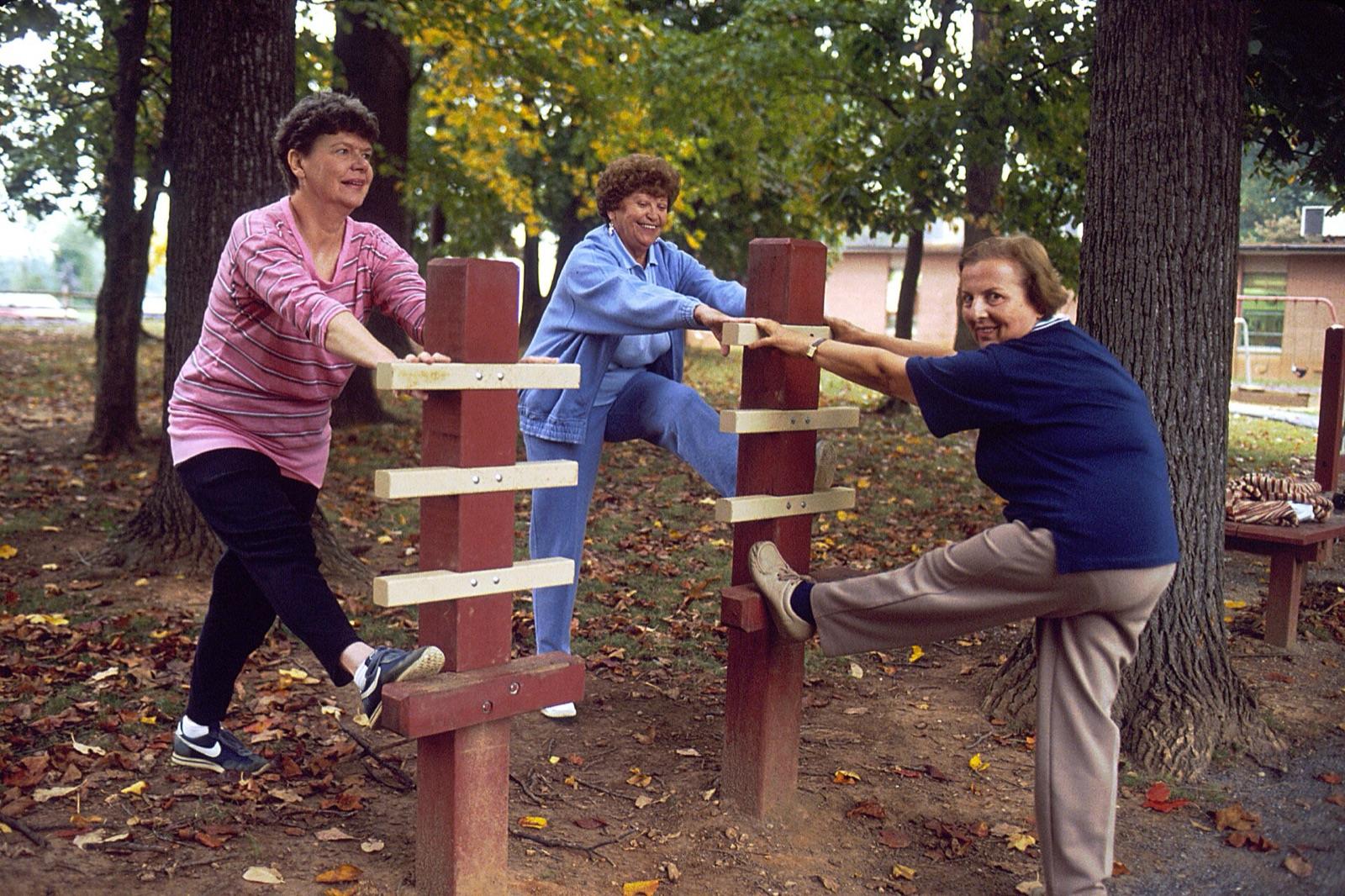
Simple habits will not remove every symptom, but they are a sensible first step and carry almost no risk. For hot flashes, the National Institute on Aging suggests dressing in layers, keeping the bedroom cool, using a fan, avoiding alcohol, spicy foods and caffeine, stopping smoking and keeping a healthy weight.
Eat well, stay active, and get enough calcium and vitamin D for your bones. Physical activity also keeps muscle strength, which is part of standard guidance. Be realistic about what exercise can do: on limited evidence, exercise and cooling techniques are not recommended specifically for hot flashes, and weight loss had weaker evidence. Their value lies in your overall health.
Small, steady changes work better than a big overhaul. A daily walk, a lighter evening meal, and a cooler bedroom are easy to keep up.
- Dress in layers; keep the bedroom cool; use a fan
- Limit alcohol, spicy foods and caffeine; do not smoke
- Stay active and keep your muscle strength
- Get enough calcium and vitamin D
What will my visit with Gissella Rivera at Viva Centers look like?
Your visit is a conversation first. Gissella Rivera listens to your symptoms and how they affect your sleep, work and relationships, then reviews your medicines, your menstrual and bleeding history, and your personal and family health history. Please bring your medicine list, earlier results, and the dates of any unexpected bleeding.
Because symptoms and menstrual history are usually enough in healthy women aged 45 or older, labs are ordered only when they will help, for example to look for another cause. We then talk through the options together: hormonal and non-hormone choices, their benefits and their risks, and which fit your health and your preferences. A prescription is part of the visit when it is appropriate.
You will leave with a plan and a follow-up. Hormone treatment is reviewed at least once a year. When something is outside the visit, such as a mammogram, a bone density scan or gynecologic evaluation, we coordinate the referral.
Viva Centers is a comprehensive medical center at 10560 NW 27th Street, Unit 101, Doral. Coverage varies, and we verify your benefits before the visit. Use the booking button on this page to book with Gissella Rivera. There is no pressure to decide everything on the first day.
- Symptom, history and medicine review
- Labs when they answer a question
- Shared decision on hormonal and non-hormone options
- Follow-up and referrals for mammogram, bone density and gynecology
When should I get care right away?
Some changes should never wait for a routine appointment. Any bleeding after 12 months without a period needs prompt evaluation, even if it is light. See a clinician soon for bleeding that is heavier than before, bleeding after sex or between periods, very heavy bleeding, periods that come close together or last more than a week, or a fast heartbeat. Periods stopping before age 45 are also worth a visit.
Chest pain, trouble breathing, sudden weakness on one side of the body, trouble speaking, or severe swelling or pain in a leg, especially if you use hormones, may be an emergency. Heavy bleeding with dizziness or fainting, or a pad soaked through in under an hour, may also be an emergency.
If you might be having an emergency, call 911. For a question that is not an emergency, call Viva Centers at (305) 209-0001. This page is education, not a diagnosis.
Studies & sources
- What Is Menopause?
National Institute on Aging (NIH) · 2024
Menopause is when periods stop for good after 12 months with no period, it is a normal part of aging, and symptoms such as hot flashes, sleep trouble and vaginal dryness are common.
- Menopause (health topic)
MedlinePlus (NIH) · 2026
Menopause is reached after 12 months without a period, and falling estrogen can cause hot flashes, poor sleep, vaginal dryness, bladder problems, bone loss and higher cholesterol.
- Executive summary of the Stages of Reproductive Aging Workshop + 10 (STRAW+10)
The Journal of Clinical Endocrinology & Metabolism · 2012
The standard staging system for reproductive aging places the early transition at cycles that differ by 7 days or more and the late transition at a skipped period of 60 days or longer.
- Duration of menopausal vasomotor symptoms over the menopause transition (SWAN)
JAMA Internal Medicine · 2015
In a study of 3,302 women, frequent hot flashes lasted a median of 7.4 years, with the longest course in women whose symptoms began early.
- Symptoms of menopause and perimenopause
NHS (UK) · 2026
The NHS lists changed periods, hot flushes, sleep problems, mood changes, brain fog and vaginal dryness as common symptoms that usually last 7 to 9 years.
- The Menopause Years (FAQ)
American College of Obstetricians and Gynecologists · 2025
Women lose bone fastest in the first 4 to 8 years after menopause, mostly at the hip, wrist and spine.
- Menopause: identification and management (NICE guideline NG23)
NICE · 2015
In otherwise healthy women aged 45 or older, perimenopause and menopause can be identified from symptoms and menstrual history without lab tests. Menopause still requires 12 months without a period when not using hormonal contraception. FSH is considered only at ages 40 to 45 with symptoms and a cycle change, or under 40 when menopause is suspected.
- The 2022 hormone therapy position statement of The North American Menopause Society
The Menopause Society (formerly NAMS) · 2022
Hormone therapy is the most effective treatment for hot flashes and for vaginal and urinary changes, and its balance of benefit and risk is favorable for most healthy women under 60 or within 10 years of menopause.
- Treatment of Symptoms of the Menopause: An Endocrine Society Clinical Practice Guideline
Endocrine Society · 2015
Hormone therapy is the most effective treatment for menopausal symptoms, risk should be screened first, and it should not be used to prevent heart disease, breast cancer or dementia.
- Risks and benefits of estrogen plus progestin in healthy postmenopausal women: principal results from the Women's Health Initiative randomized controlled trial
JAMA · 2002
In women with a uterus taking estrogen plus progestin for about 5 years, rates of breast cancer, stroke, lung blood clots and coronary heart disease were higher, while colorectal cancer and hip fractures were lower.
- Menopausal hormone therapy and health outcomes during the intervention and extended poststopping phases of the Women's Health Initiative randomized trials
JAMA · 2013
With longer follow-up, estrogen plus progestin kept a higher breast cancer risk. Estrogen alone after hysterectomy was linked to a lower breast cancer risk in that trial. That finding is not a reason to use hormone therapy to prevent breast cancer.
- Association of menopausal hormone therapy with breast cancer incidence and mortality during long-term follow-up of the Women's Health Initiative randomized clinical trials
JAMA · 2020
Over long follow-up, estrogen alone after hysterectomy was linked to fewer breast cancers and fewer breast cancer deaths, while estrogen plus progestin was linked to more breast cancers. Hormone therapy is not used to prevent breast cancer.
- Menopausal hormone therapy and long-term all-cause and cause-specific mortality: the Women's Health Initiative randomized trials
JAMA · 2017
Over 18 years, deaths from any cause were not different between women who used menopausal hormone therapy and those who did not.
- Vascular effects of early versus late postmenopausal treatment with estradiol (ELITE)
New England Journal of Medicine · 2016
ELITE measured artery-wall thickening, not heart attacks. Thickening progressed more slowly with oral estradiol under 6 years past menopause, but not at 10 or more years.
- Arterial imaging outcomes and cardiovascular risk factors in recently menopausal women: a randomized trial (KEEPS)
Annals of Internal Medicine · 2014
In 727 recently menopausal women, four years of hormone therapy did not change artery-wall thickening. Some risk markers improved, but the trial was too small to compare heart attacks or strokes.
- Hormone Therapy for Menopause (FAQ)
American College of Obstetricians and Gynecologists · 2024
ACOG describes hormone therapy options, who should not use it, and its small increased risks of breast cancer, stroke and blood clots, and advises a yearly review.
- Benefits and risks of hormone replacement therapy (HRT)
NHS (UK) · 2023
The NHS says benefits of hormone therapy are likely to outweigh risks for women under 60 without high breast cancer or clot risk, and that vaginal estrogen does not raise breast cancer or clot risk.
- The 2023 nonhormone therapy position statement of The North American Menopause Society
The Menopause Society (formerly NAMS) · 2023
The strongest non-hormone options for hot flashes include cognitive-behavioral therapy and clinical hypnosis, while supplements and herbal remedies are not recommended.
- Hot Flashes: What Can I Do?
National Institute on Aging (NIH) · 2021
The National Institute on Aging suggests layers, a cool bedroom, avoiding alcohol and spicy food, quitting smoking and keeping a healthy weight to ease hot flashes.
- Early or premature menopause
NHS (UK) · 2025
Early menopause means before 45 and premature menopause before 40, and replacing missing hormones matters because of higher bone and heart risks.
- FDA requests labeling changes to clarify benefit/risk of menopausal hormone therapies (FDA announcement, 11/10/2025)
U.S. Food and Drug Administration · 2025
In 2025 the FDA asked to remove several statements from the boxed warning on menopausal hormone therapies, with label changes rolling out product by product.
- Evidence-based guideline: premature ovarian insufficiency (ESHRE)
ESHRE · 2024
The 2024 European guideline says premature ovarian insufficiency affects about 3.5% of women; it applies only before age 40, after missed or irregular periods for at least four months, with pregnancy ruled out and hormonal contraception or treatment considered, when FSH is above 25 IU/L. A high FSH alone does not make the diagnosis, and that level does not diagnose the usual late transition.
- About Primary Ovarian Insufficiency (POI)
NICHD (NIH) · 2024
Primary ovarian insufficiency means the ovaries stop working normally before age 40, yet a woman may still have periods and may still become pregnant.